admin
adminWhat is Horiatiki / Greek Salad?
Greek Salad, named Horiatiki in greek, is the most popular salad in Greece. It is also one of the most popular and delicious salads in the world. TasteAtlas ranked greek salad number 6 in the top 100 salads in the world. Greek salad recipe mainly consists of tomatoes, cucumbers, greek olive oil, and, of course, feta.
When is the Best Time to Make a Greek Salad?
While Greeks may make this salad throughout the year, it is best served in the summer. It is best to make it from May to October or September. This is because tomatoes, Greek Salad’s main ingredient, are the juiciest and sweetest during those months!
During the winter, Greeks may choose a different kind of salad, such as “Lahanosalata” (cabbage salad) or “Maroulosalata” (lettuce salad).
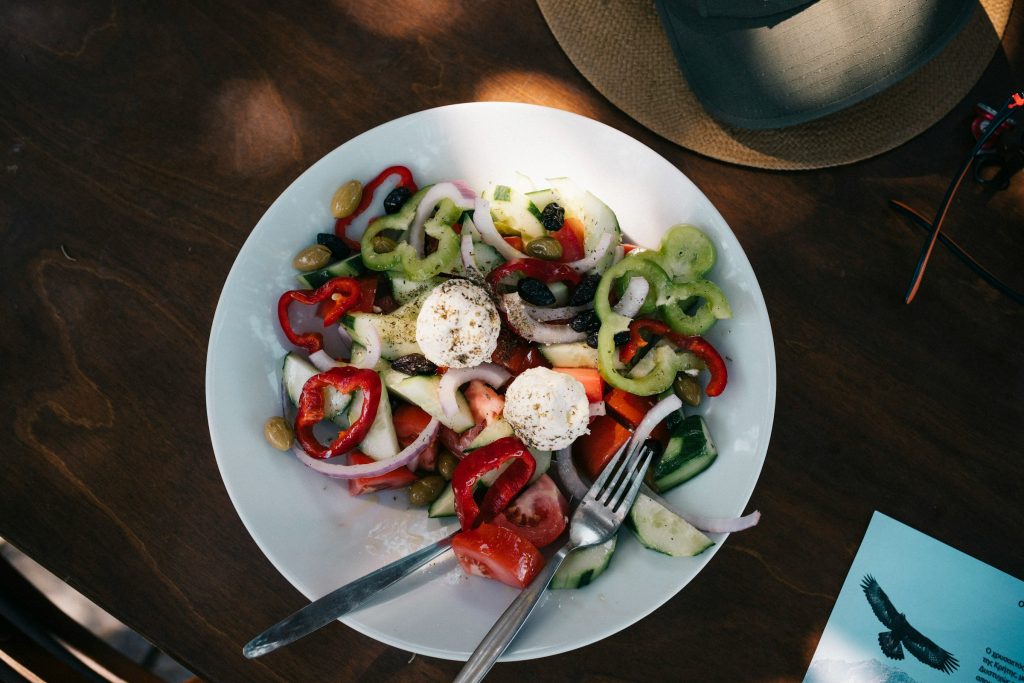
Horiatiki / Greek Salad Ingredients
- 3 – 4 Tomatoes
- 1 Cucumber
- Feta Cheese
- 1 Red Onion
- Kalamata Olives
- Olive Oil
- Dried Oregano
- 1 Green Bell Pepper
Horiatiki / Greek Salad Instructions
Making this salad shouldn’t take you more than 2 minutes, as it doesn’t require any special preparation.
- Start by cutting the tomatoes into medium-sized pieces.
- Cut 1 whole cucumber into rounds; it is suggested you peel the cucumber first, although some prefer keeping the peel.
- Add red onion slices.
- Add 4 – 6 Kalamata olives.
- Add a few slices of green bell pepper. (optional!)
- Add a big slice of feta cheese on top of your salad.
- Lastly, spray dried oregano and salt and sprinkle with a generous amount of greek olive oil.
Recipe for One
Following the greek salad recipe above, you can make a greek salad for one person. Simply reduce the amount of tomato and cucumbers used, as they are horiatiki’s main ingredients.
Recipe Alternatives
If you are missing some of the ingredients for your greek salad, you may skip some such as green bell pepper, Kalamata olives or even feta. It may not taste like the original greek salad recipe, but it is still delicious to eat during lunch.
What to Serve with Horiatiki (Pairing Ideas)
While a greek salad on its own is delicious, it is better served as a side dish. Some main courses you can have with your salad include: all kinds of meat, especially chicken, pork and sheep.
Greek salad may also be served with various pasta dishes, souvlaki or even kalamari.
Frequently Asked Questions about Horiatiki / Greek Salad
Is Authentic Horiatiki Healthy?
Yes, Horiatiki Greek Salad can be a very healthy and nutritious meal if eaten in the right quantity! Tomatoes, Cucumbers, Onions, and Peppers can be a great source of vitamins and minerals while they provide antioxidants and essential nutrients.
Moreover, greek feta cheese adds protein and calcium, which make the salad more filling and satisfying to eat.
Does Greek Salad have a Dressing Recipe?
The traditional Greek Salad recipe does not have a dressing like many other salad recipes. Instead, Greek Salads are dressed with extra virgin olive oil, oregano and salt.
How many calories does Horiatiki / Greek Salad have?
A greek salad contains around 400 – 600 calories per serving. If you are on a diet, a simple trick to reduce the calories in your greek salad recipe is to lower the amount of greek feta cheese and olive oil. Both of them contain the most calories in the whole dish.
Does Horiatiki / Greek Salad have lettuce?
Traditional Horiatiki salad does not include lettuce. Sometimes, however, you may find alternative greek salad recipes including lettuce.
Is Horiatiki / Greek Salad keto-friendly?
Yes, Greek Salad is keto-friendly as it is low on carbohydrates while it is high on healthy fats.
Is Horiatiki / Greek Salad Vegan or Vegetarian-friendly?
While traditional greek salad isn’t vegan, a horiatiki is vegetarian-friendly. To make your greek salad recipe vegan-friendly, all you have to do is remove the greek feta cheese.